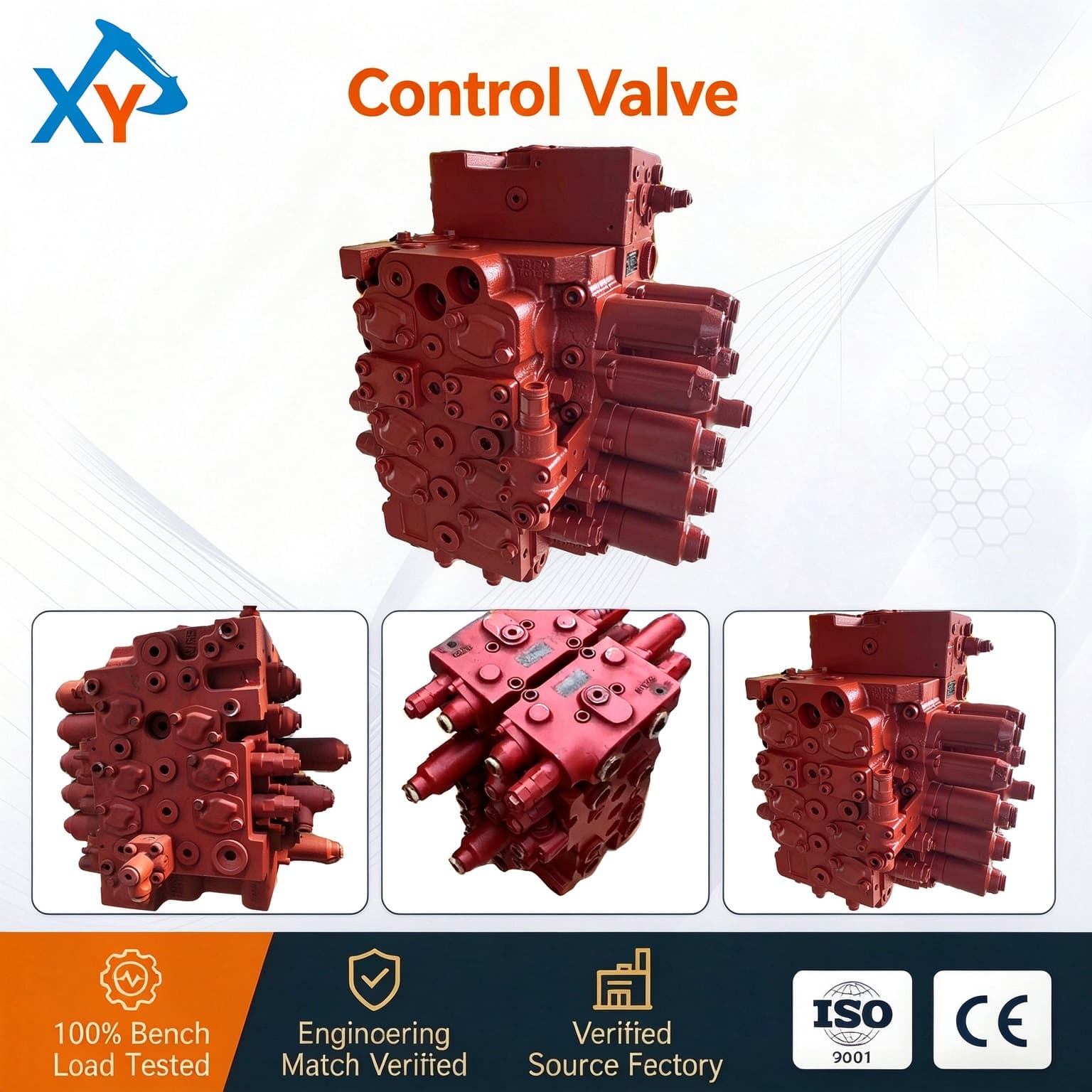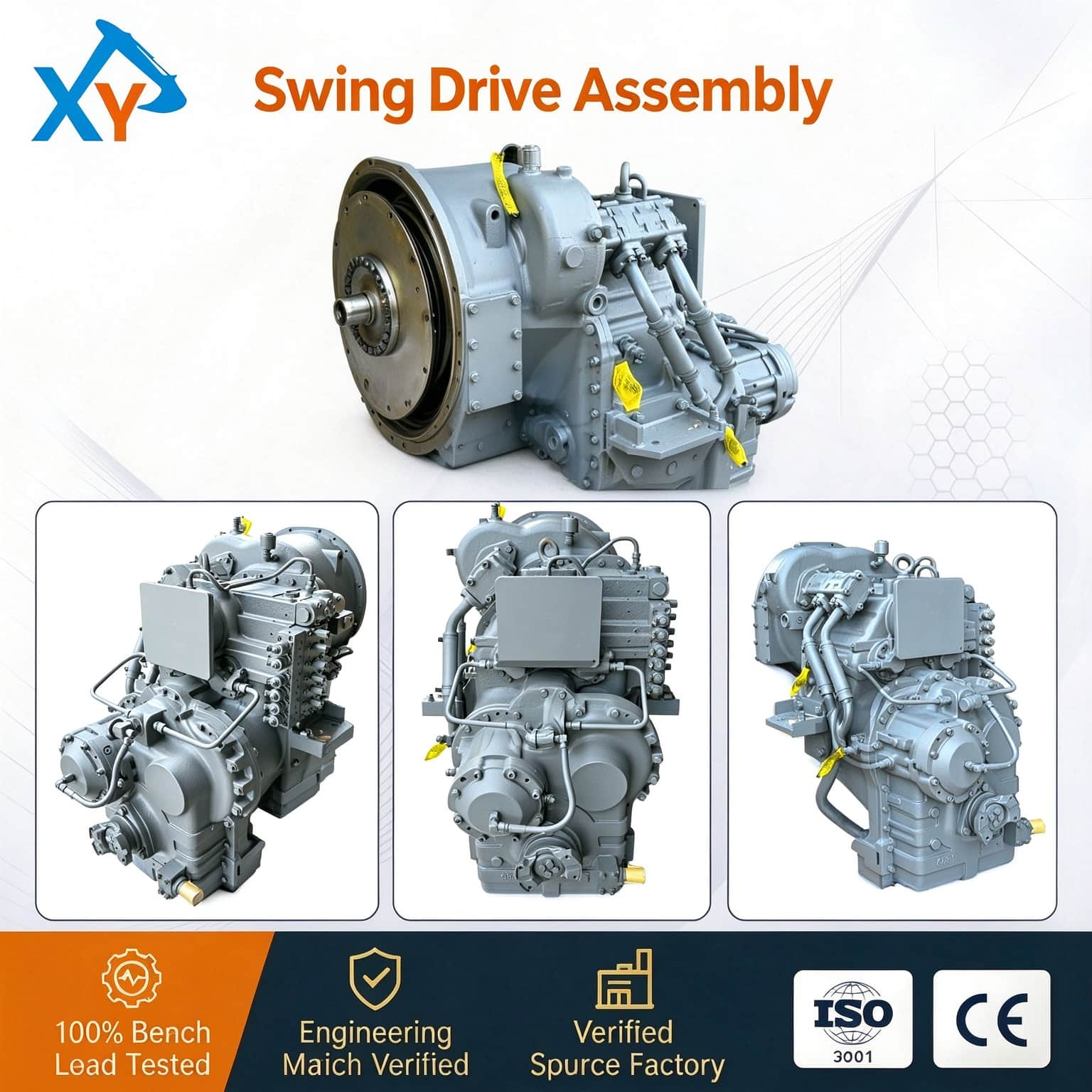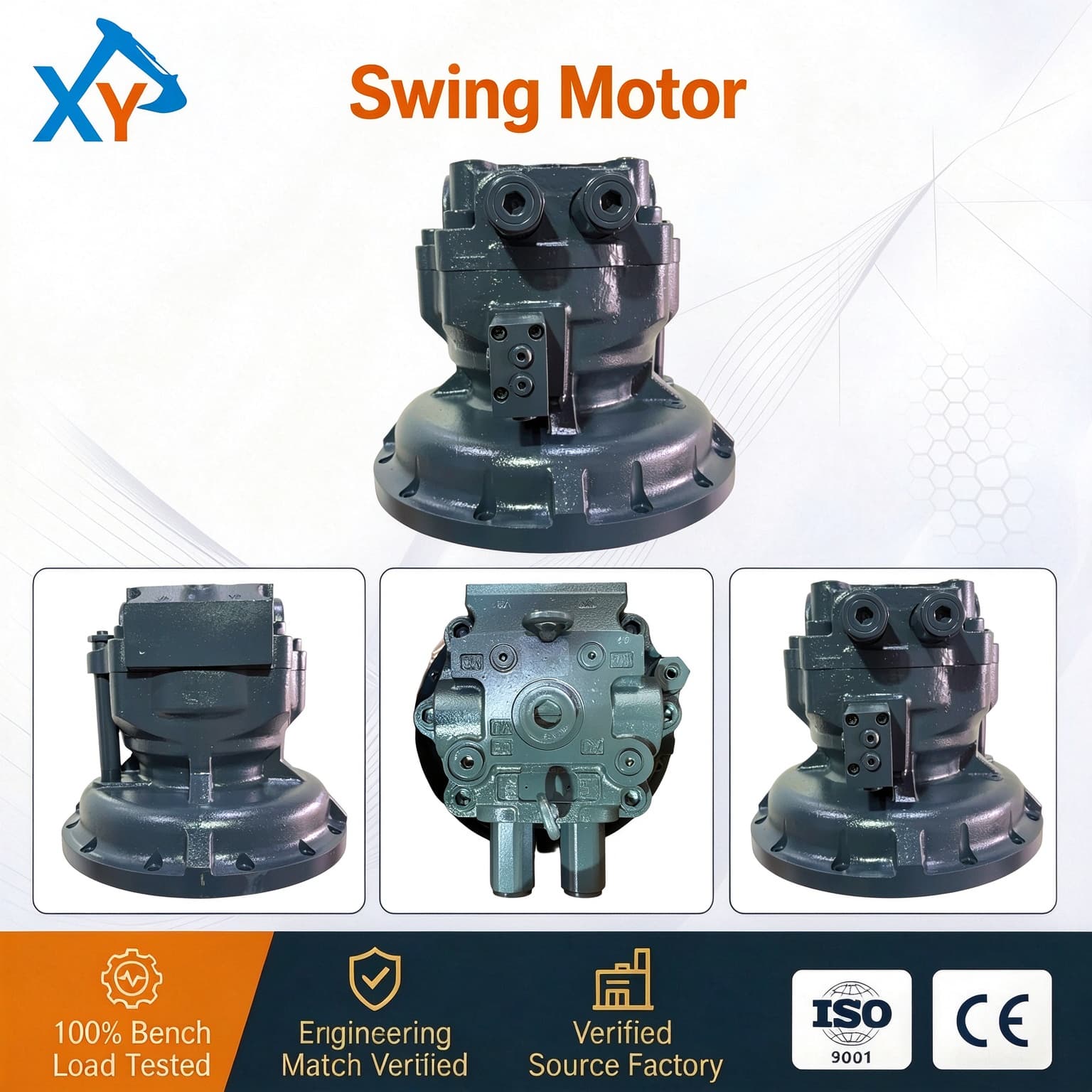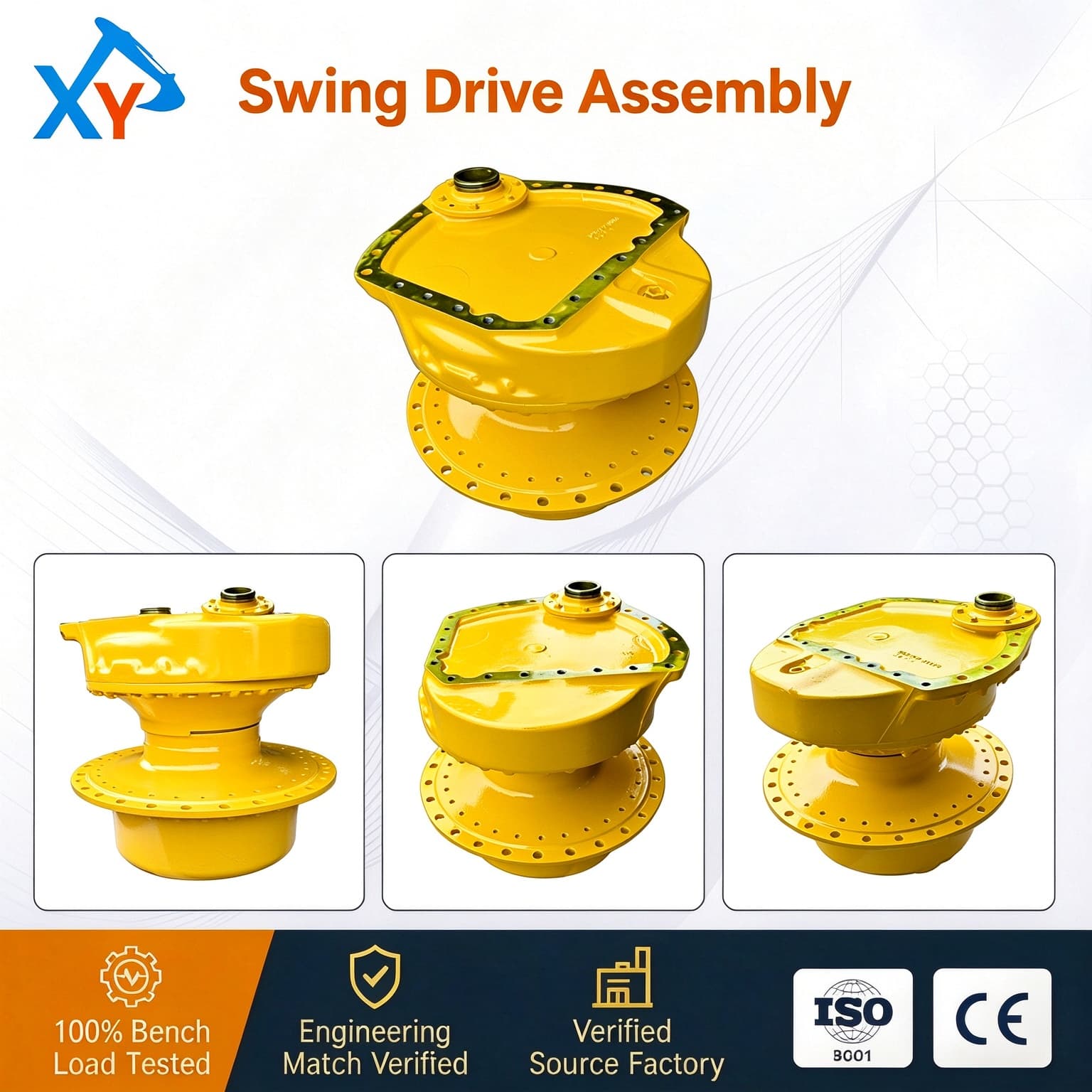
XINYA supplies excavator parts including hydraulic pumps, travel motors, swing devices, control valves, engine parts and undercarriage components. Send us your machine model, OEM part number or product photo for fast matching and quotation.
XINYA supplies excavator parts including hydraulic pumps, travel motors, swing devices, control valves, engine parts and undercarriage components. Send us your machine model, OEM part number or product photo for fast matching and quotation.

When a replacement request comes in, the first useful question is simple, is the machine on tracks or on wheels? The answer points to the biggest parts difference, which sits below the slewing ring. Crawler uses track chains, rollers, idlers, sprockets, and hydraulic final drives. A wheeled machine uses tires, axles, hubs, steering, brakes, and a driveline.
Above that line, the two machines may share an engine, hydraulic pump, control valve, swing device, and working circuits. That similarity can be misleading during purchasing. A part that performs the same job still needs a model, serial-number, and interface check.
A quick comparison keeps the order from drifting toward “it looks close enough.” The travel systems use different component families, and the wheeled version adds road hardware.
| System | Crawler Excavator | Wheeled Excavator | Parts-Buying Implication |
| Ground contact | Track shoes or rubber pads | Tires and rims | Wear items are different |
| Travel drive | Travel motor and final drive turn the sprocket | Driveline powers the axles and hubs | Similar machine weight does not prove compatibility |
| Support | Rollers and idlers | Axles, hubs, and an oscillation system where fitted | Inspection points differ |
| Direction control | Relative track speed | Hydraulic steering | Wheeled machines add steering components |
| Working stability | Track footprint | Outriggers or blade where fitted | Stabilizer parts depend on configuration |
| Braking | Travel-drive braking arrangement | Service and parking brakes | Identification requires the correct system diagram |
The upper structure rotates above the chassis. That is why two machines can look alike from the cab upward and still need completely different travel parts. Locate the failed component first, then open the parts book and compare numbers.
Both types may have a diesel engine, main pump, control valve, swing motor, gearbox, boom circuits, cab, and electrical controls. The details can change after a production revision.
Below the upper structure, crawler-specific excavator chassis parts carry the machine on continuous tracks. A wheeled chassis has to roll, steer, brake, and let the axles move. The assemblies are built around those different jobs.
Two pumps can do the same hydraulic job and still have different displacement settings, regulators, shafts, mountings, or ports. Swing gearboxes bring the same problem with reduction ratios and pinion geometry. Put the machine model, serial range, component number, mounting pattern, ports, ratio, and installation position beside the candidate part. A photo can start the search. It cannot finish it.

The crawler undercarriage guides the track, carries the machine, maintains tension, and sends drive torque to the ground. One worn part often leaves marks on the parts around it. That is worth remembering when ordering crawler excavator parts.
Track chains use links, pins, and bushings, and the link pitch has to match the sprocket. Shoes bolt to the links. Some machines use rubber tracks or bolt-on pads when the surface calls for them.
Track rollers carry the lower run. Carrier rollers support the return run. The idler guides the track, and the sprocket pulls it around the frame. The adjuster and recoil assembly keep tension in range.
For excavator undercarriage parts or excavator track parts, have the serial number, chain specification, shoe width, bolt pattern, and position ready. A quick inspection of the chain, sprocket profile, rollers, idler, and tension can prevent a one-part fix that fails again.
Hydraulic pressure turns the travel motor, and the reduction gears turn that input into sprocket torque. A supplier may list the motor and gearbox together as an excavator travel device, or list excavator travel motor parts and final-drive components separately.
Match the part number, mounting holes, ports, shaft or sprocket interface, and travel configuration. A crawler final drive belongs to a different drive system from a wheeled excavator hub reduction or axle drive.
A wheeled excavator trades the track system for a road-going chassis. The parts list may include tires, rims, axles, hubs, steering cylinders, drive shafts, differentials, and brakes. Many models add stabilizers for digging. The parts manual for the machine decides what is actually fitted.
Tire size, rim fit, load specification, tread, and wheel position all matter. The hub behind the wheel carries load and transfers torque. Front and rear axles may steer, drive, oscillate, or lock, depending on the chassis.
When comparing axles for construction machinery, record the axle position and its job. Similar-looking axles can have different ratios, widths, mountings, brakes, or steering geometry. The transmission, shafts, differentials, axles, and hubs still have to work together as one driveline.
The steering system may use cylinders, rods, knuckles, joints, or a steering valve. Service and parking brakes bring another set of model-specific parts. If the chassis vibrates, the source could be a shaft, joint, hub, tire, or axle. Find that source before ordering.
Some machines use outriggers, a dozer blade, or both for support. That adds cylinders, pins, bushings, valves, hoses, and mounting hardware to the parts list. Include the fitted options in the request.
Shared upper-structure functions are where mistaken orders usually begin. A common machine brand or engine family does not settle the fit. Production revisions, hydraulic settings, and controls can change the required part.
| Part Group | Same Function? | Directly Interchangeable? | What to Check |
| Main hydraulic pump | Often | Never assume | Number, displacement, regulator, drive, mounting, and ports |
| Swing device | Often | Never assume | Motor, ratio, pinion, mounting, and ports |
| Main control valve | Often | Usually model-specific | Sections, pilot logic, ports, and control type |
| Engine components | Sometimes | Depends on engine version | Engine model, serial number, and part number |
| Electrical components | Sometimes | Often configuration-specific | Voltage, connector, controller, and software |
| Seals and filters | Sometimes | Only after specification checks | Dimensions, material, pressure, and fluid compatibility |
The same caution applies to hydraulic excavator parts outside the travel system. An excavator hydraulic pump may appear in both machine types, but the data plate still has to agree with the machine record.
Ground conditions and travel habits decide where the inspection starts. Abrasive soil, rocks, impact, incorrect track tension, and packed debris can spread wear across crawler chains, bushings, rollers, idlers, and sprockets. Inspect mating parts together; a worn chain can damage its sprocket.
Frequent road travel shifts attention to tires, wheel ends, steering joints, brakes, axle seals, and the driveline. Cuts, uneven wear, looseness, leakage, noise, or vibration narrow the search. Inspection and the machine record still have to confirm the failed component.
The purchase price is only one repair cost. Access time, related wear, fluid loss, downtime, and a wrong configuration add up.

Begin with the machine, then work toward the component. This sequence is more reliable than searching by appearance or operating weight.
XINYA’s website groups parts into hydraulic pumps, travel devices, swing devices, control valves, engine parts, hydraulic components, electrical components, chassis parts, and seals. The categories narrow the component family before checking fit. XINYA asks buyers to provide a machine model, OEM part number, or product photo for matching and quotation. Add the serial number, position, data-plate image, connectors, ports, and mounting details when available. This helps distinguish a complete assembly from a motor, gearbox, subcomponent, or repair kit.
Send the machine type, full model, serial number, part number, installation position, and clear photos to check crawler excavator parts or wheeled-machine components.
Q1: Are Crawler and Wheeled Excavator Parts Interchangeable?
A: A few upper-structure components sitting on the top half might share the exact same base design. But wait, you still have to verify everything. You must check the machine model, the true serial-number range, and the exact stamped part number. Crawler undercarriage pieces do completely different travel, support, steering, and braking functions than wheeled chassis parts. Because of this, they almost always belong to totally separate component families.
Q2: Do Both Excavator Types Use the Same Hydraulic Pumps?
A: They might use pumps that share the exact same function. They might even come from the same product family. However, the inner pump displacement can be wrong. The top regulator, spinning shaft, mounting bolt holes, fluid ports, and smart control requirements can all differ. This same exact rule applies to an excavator swing device. Always match up its metal data plate and true part number to your strict machine record. Never just rely on the overall excavator size.
Q3: What Are the Main Crawler Excavator Parts in the Undercarriage?
A: The most common parts down below include the heavy track chains. You will also see steel links, tough pins, round bushings, flat shoes, and thick rubber pads. Look for bottom rollers, big front idlers, back sprockets, tight track adjusters, and bouncy recoil components. Do not forget the strong travel motors and heavy final drives. The true list of parts and their exact dimensions will fully depend on your exact machine model and how the undercarriage configuration was put together.
Q4: Which Parts Are Specific to a Wheeled Excavator?
A: Wheeled diggers roll on big fat tires. They use metal rims, strong hubs, long axles, tricky steering parts, hot brakes, spinning shafts, heavy differentials, and big transmission components. Depending on what exact model you own, the bottom chassis might also include stiff axle locks. It could use long metal outriggers or even a wide front dozer blade. Always check closely inside your thick machine parts manual before selecting a big new assembly.
Q5: What Information Is Needed to Order the Correct Part?
A: You need to provide the complete machine model and the long serial number. Also, give them the exact component number and tell them the installation position on the rig. Take extremely clear photos of the broken part and the shiny data plate. Taking images of the open fluid ports, plastic wire connectors, spinning shafts, heavy gears, and mounting points can easily resolve confusing or uncertain matches. Make sure to state clearly whether you need a fully built assembly, just an individual part, or a cheap repair kit.