XINYA supplies excavator parts including hydraulic pumps, travel motors, swing devices, control valves, engine parts and undercarriage components. Send us your machine model, OEM part number or product photo for fast matching and quotation.
XINYA supplies excavator parts including hydraulic pumps, travel motors, swing devices, control valves, engine parts and undercarriage components. Send us your machine model, OEM part number or product photo for fast matching and quotation.

An excavator’s hydraulic system lets the operator raise and lower the boom, move the arm, curl the bucket, and rotate the upper structure. These are the four core hydraulic functions most relevant to digging and positioning. Track travel is hydraulic on many excavators too, but it is a separate chassis function rather than one of the four workgroup-and-swing functions discussed here.
The machine creates hydraulic flow with its pump, directs that flow through control valves, and sends it to hydraulic actuators. Cylinders produce linear movement at the boom, arm, and bucket. A hydraulic motor and reduction gearbox turn the upper structure for swing. Exact layouts vary by model, so use the machine’s parts book and service manual when diagnosing a specific circuit.
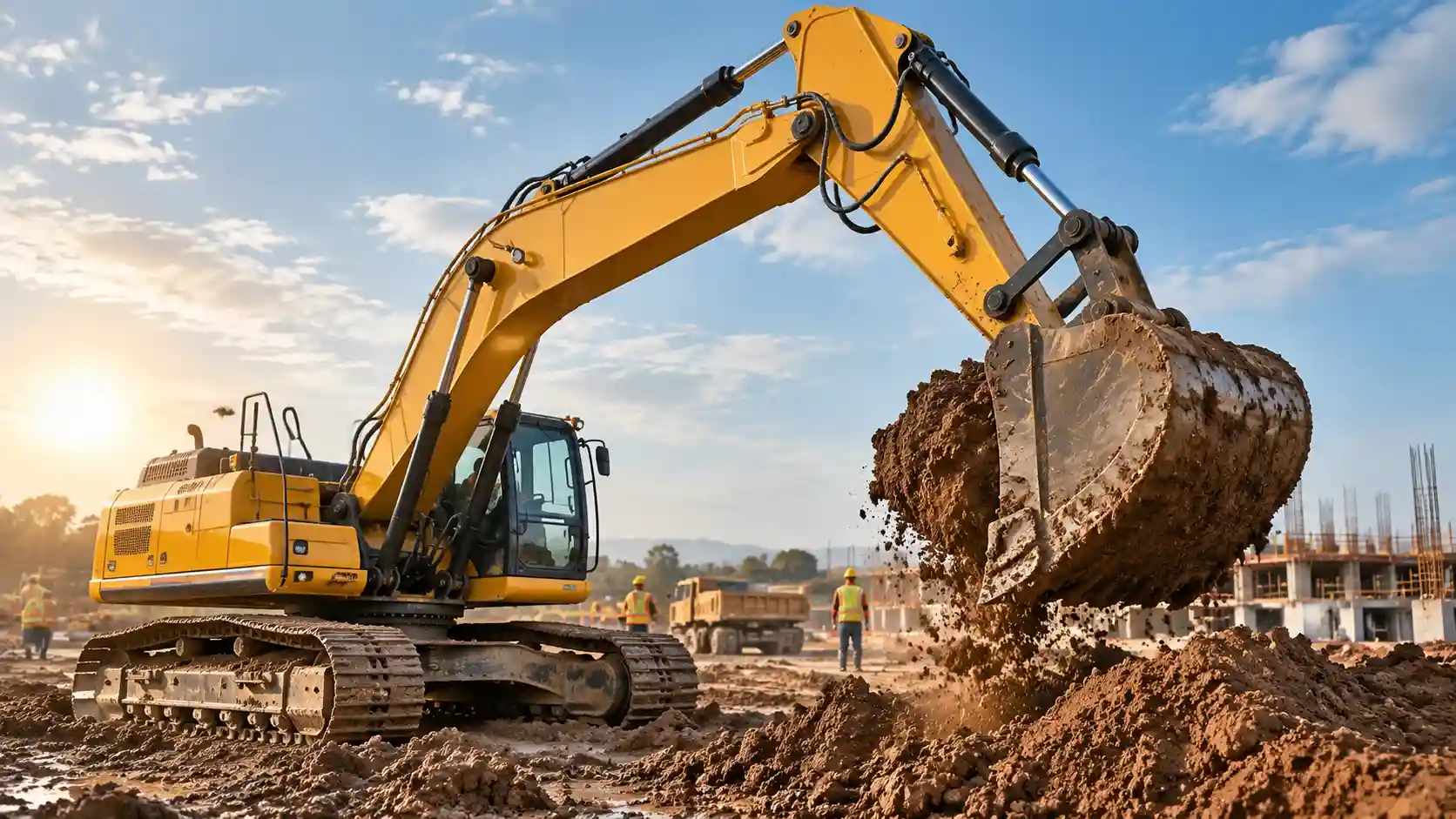
| Function | Typical actuator | What the operator controls | Main job |
| Boom | Boom cylinders | Raise and lower the boom | Sets working height and reach |
| Arm or stick | Arm cylinder | Pulls the arm in or pushes it out | Controls digging reach and bucket position |
| Bucket | Bucket cylinder and linkage | Curls or dumps the bucket | Scoops, retains, and releases material |
| Swing | Swing motor and reduction device | Rotates the upper structure | Positions the attachment around the machine |
The boom connects the excavator’s upper structure to the arm. Boom cylinders extend or retract to lift or lower the assembly. This movement determines the height of the attachment and contributes to reach, loading, and digging posture.
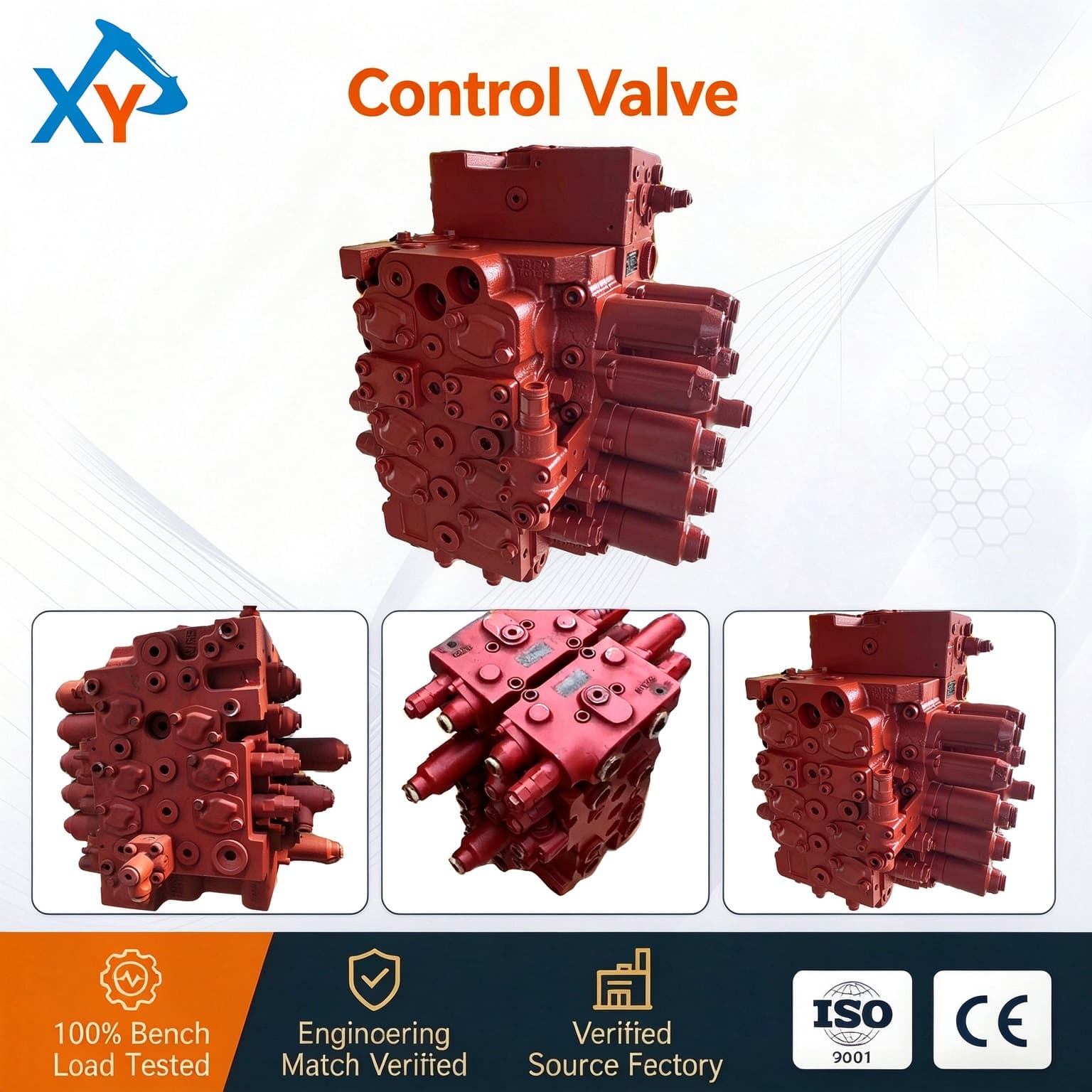
The main control valve meters oil to the cylinder chambers. The return side sends oil back through the circuit. Valve sections and circuit logic differ among machines, so the model documentation governs inspection and adjustment.
If boom movement is slow, uneven, or will not hold position, the symptom alone does not identify a failed pump or cylinder. Check warning messages and maintenance history, inspect for visible leakage, and compare other functions under the same conditions. Diagnosis may require manufacturer-specified tests. Never loosen a pressurized connection to test flow.
For replacement, identify whether the item is a cylinder, rod, seal kit, hose, or valve component. Record the model, serial number, position, and component ID. A similar-looking cylinder may differ in stroke, mounting, ports, or cushioning.
The same identification discipline applies when a hydraulic problem is intermittent. A function that works normally in one direction but slows in the other may point the inspection toward different valve paths, cylinder chambers, or mechanical loads. A symptom that appears only after the oil warms up may also change the order of checks. Record the condition instead of describing the machine simply as “weak.” That small distinction gives a parts specialist or technician a much better starting point.
The arm, sometimes called the stick, sits between the boom and bucket. Its cylinder moves the arm toward or away from the cab. Together with boom movement, this lets the operator control reach, digging depth, and the bucket’s path through the material.
During trenching and loading, the operator coordinates arm and bucket movement to fill the bucket without forcing an inefficient posture. Response depends on pump flow, valve metering, control system, and load.
Separate the cylinder from the rest of the circuit during troubleshooting. Look for external oil, damaged hoses, loose connections, or simultaneous changes in other functions. If only the arm circuit behaves differently, consult the model-specific diagnostic procedure before adjusting a valve or replacing a component. Internal bypass, binding, and control problems can look similar.
The bucket cylinder acts through a linkage to curl the bucket inward or tip it outward. Curling cuts into material and retains the load. Dumping releases it into a truck, stockpile, or excavation area. Linkage geometry changes the force and travel available through the bucket’s range.
Buckets, couplers, thumbs, and other attachments can change hydraulic connections and requirements. Auxiliary hydraulics for a powered attachment differ from the bucket cylinder circuit. Confirm the configuration in approved model documentation.
If the bucket moves slowly or will not hold position, inspect the cylinder, linkage pins, bushings, hoses, and attachment connections. A worn pin or binding linkage can resemble a hydraulic fault. Have a qualified technician perform prescribed leak or drift checks. Hydraulic oil can penetrate skin, and pressure may remain after shutdown.
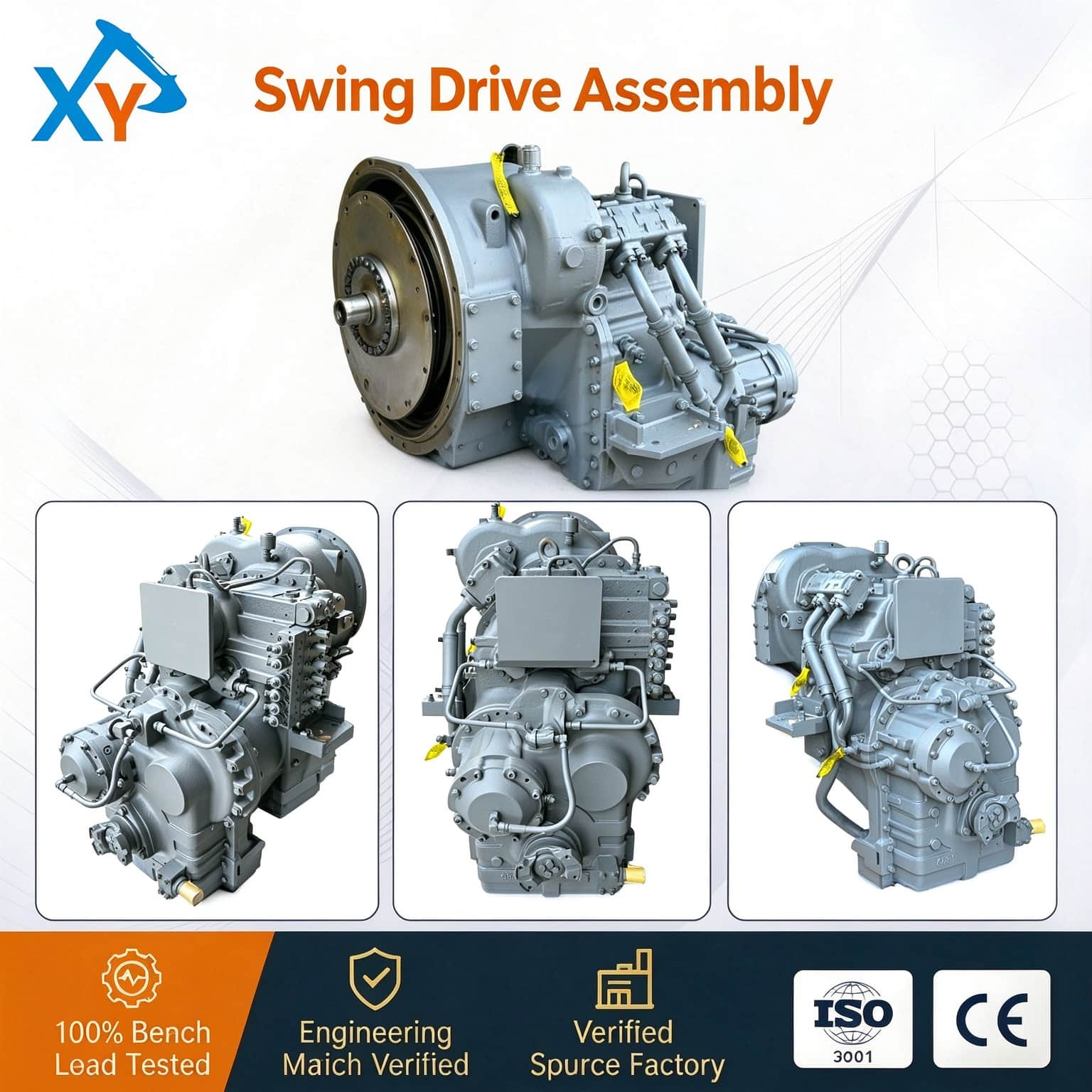
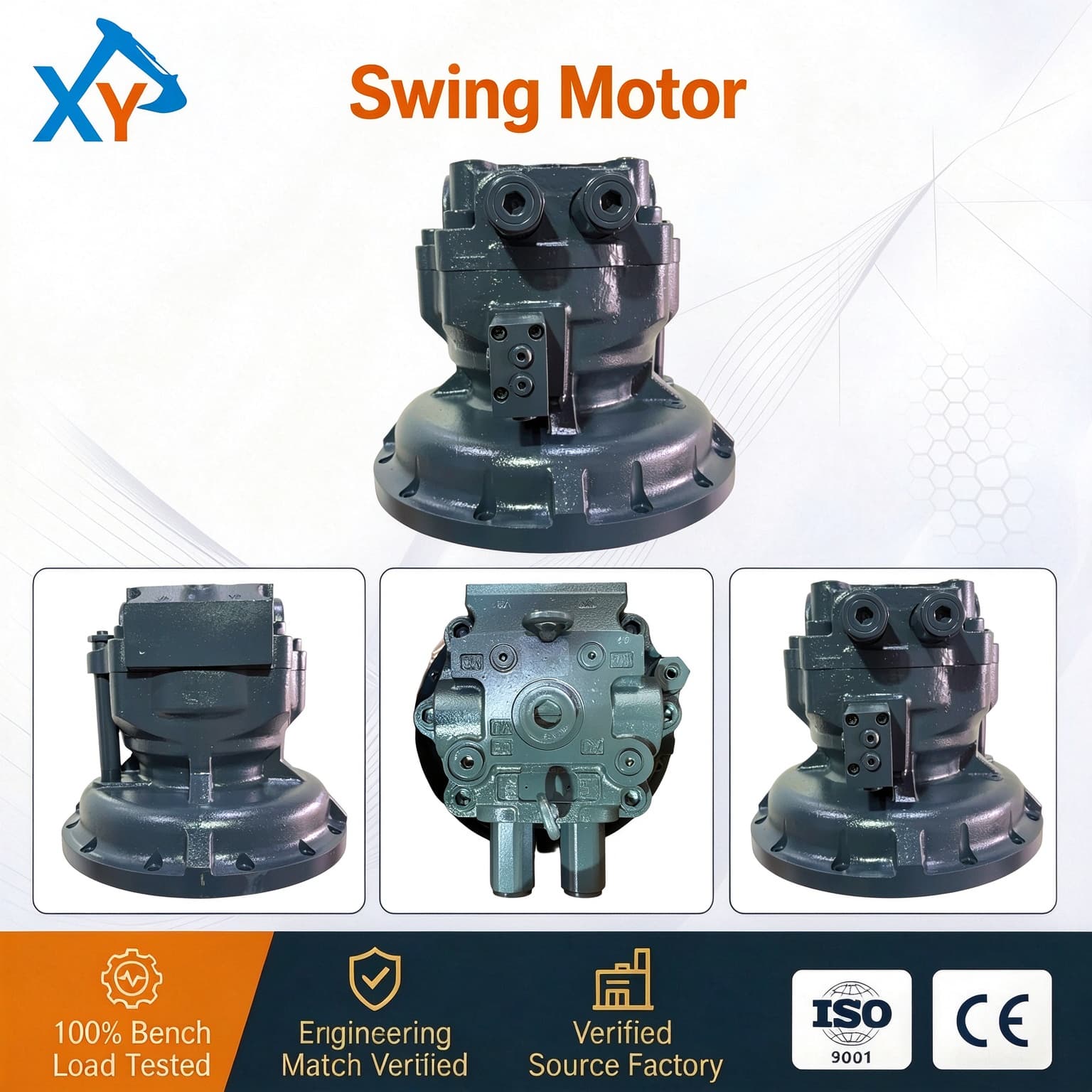
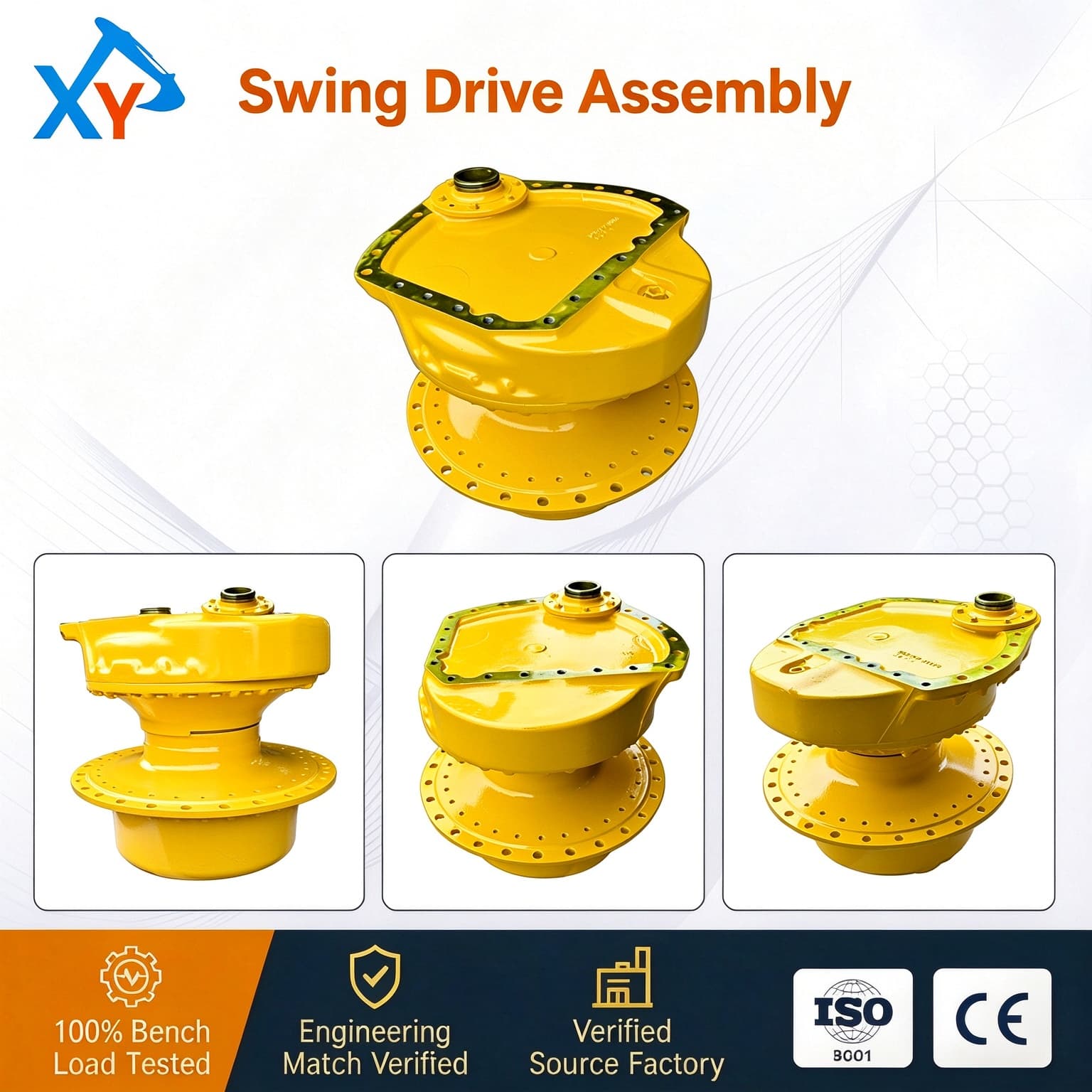
The swing circuit turns the upper structure relative to the undercarriage. Hydraulic flow drives a swing motor, and a reduction device transfers torque to the swing ring gear. This lets the operator position the boom and attachment without repositioning the tracks or wheels.
Swing positions excavated material for unloading. Smooth operation depends on both hydraulic and mechanical components. Slow rotation, noise, drift, or backlash may involve controls, oil, lubrication, mounting, the swing device, or related gears.
Do not assume the motor alone is responsible. Note whether the symptom occurs in both directions, under similar loads, or alongside other functions. Check visible leakage and follow the manufacturer’s procedure for oil level, pressure tests, and mechanical inspection. Use model- and serial-specific information before ordering an excavator swing device.
Operators combine the four functions. During a digging pass, boom and arm movement set the bucket’s path as the bucket curls. The boom lifts the load, then swing positions it for unloading. The operator coordinates controls to suit the material, space, attachment, and machine.
The pump supplies flow, and the main control valve routes it to the requested circuit. Design and simultaneous commands may affect how flow is shared or prioritized. Check the hydraulic schematic rather than assuming every machine uses the same logic.
Travel is hydraulic on many excavators. Motors or a hydraulic drive move the chassis through excavator travel devices. It is an additional function here: the title’s four are boom, arm, bucket, and swing, the main digging and positioning workgroup. Other sources may group functions differently, so treat this as a useful definition, not universal terminology.
The main pump converts engine input into hydraulic flow. Model, displacement, regulator, and controls are application-specific. Select by identification plate and part number, not machine size alone. The excavator hydraulic pump category helps locate the assembly family.
The main control valve directs flow to boom, arm, bucket, swing, and other circuits. Spool movement meters the oil. Similar-looking valves may differ in sections, ports, control logic, or calibration; verify configuration before replacement.
The valve is also where a useful diagnosis often begins. If several functions become weak together, the issue may involve shared supply, control, or maintenance conditions. If one function changes while the others remain normal, the affected valve section, actuator, line, or mechanical linkage deserves closer attention. That pattern is only a starting point. Use the target model’s hydraulic schematic and service procedure before deciding which component to remove.
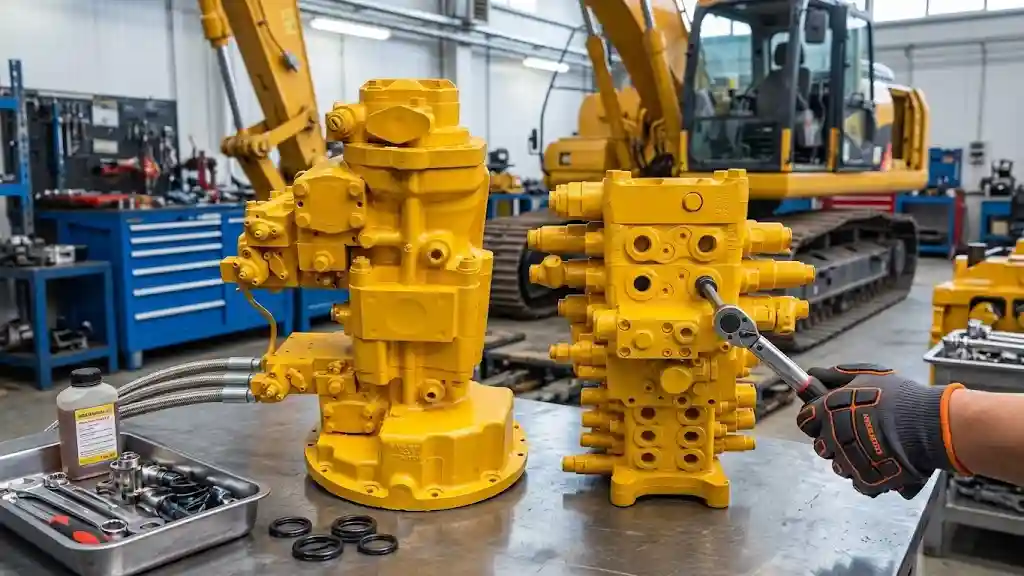
Cylinders produce linear movement; motors produce rotation. Hoses and lines carry oil between components. Identify the machine and component before sourcing excavator hydraulic components.
Never search for a leak by hand. Follow the manufacturer’s procedure for isolation, pressure relief, lifting, and repair.
For a parts match, send the make, model, serial number, OEM number if available, component and nameplate photos, affected function, and whether you need an assembly or repair part. XINYA can provide a preliminary match; confirm final fit in the machine parts documentation.
For the digging and positioning workgroup, they are boom, arm, bucket, and swing. Travel is another hydraulic function on many models.
Many excavators use hydraulic travel motors or drives. The exact arrangement depends on whether the machine is tracked or wheeled and on its model.
A hydraulic cylinder acts through the bucket linkage to curl or dump the bucket. The linkage and cylinder configuration are model-specific.
Possible causes include hydraulic, control, mechanical, or maintenance issues. A technician should use the model-specific diagnostic procedure rather than infer a failed part from speed alone.