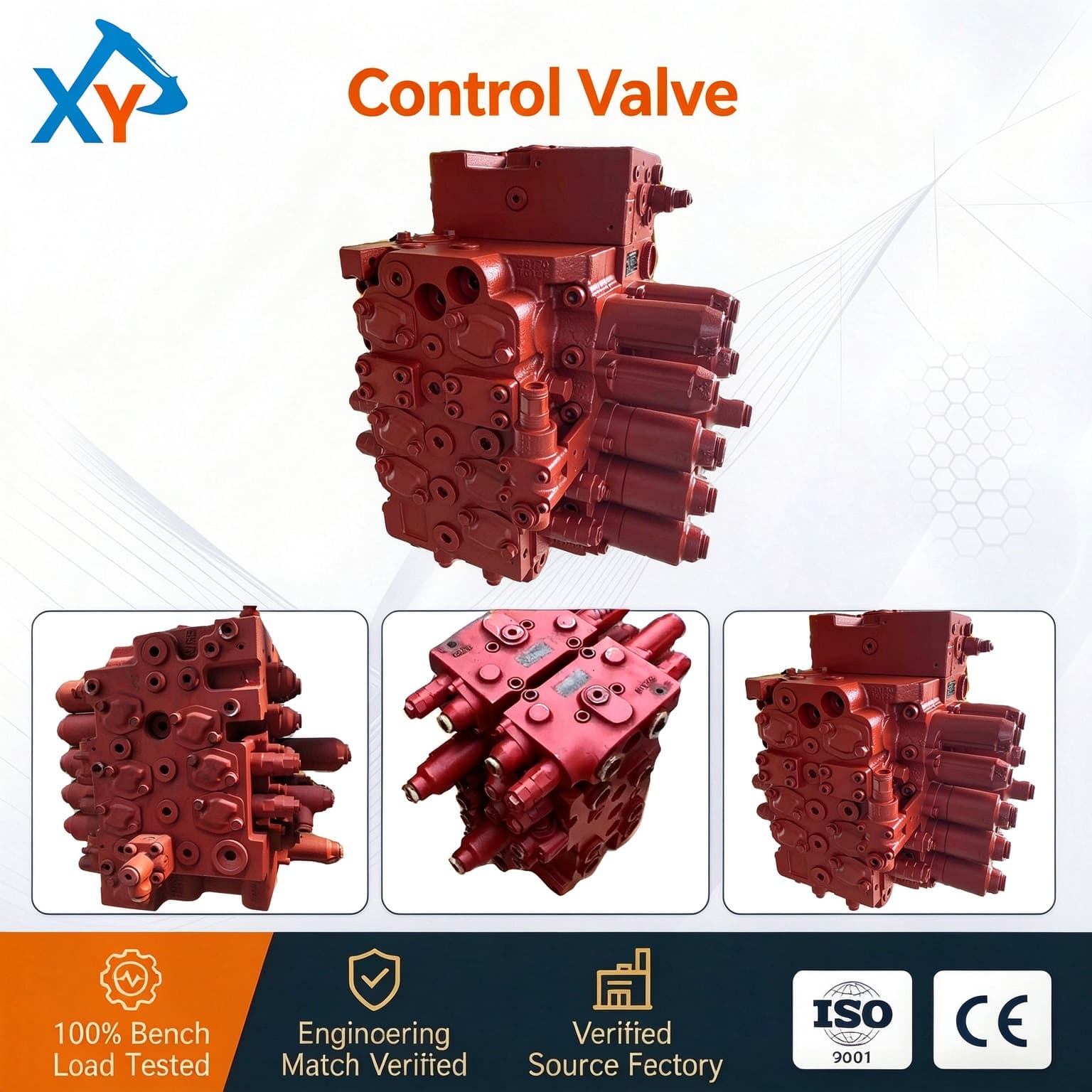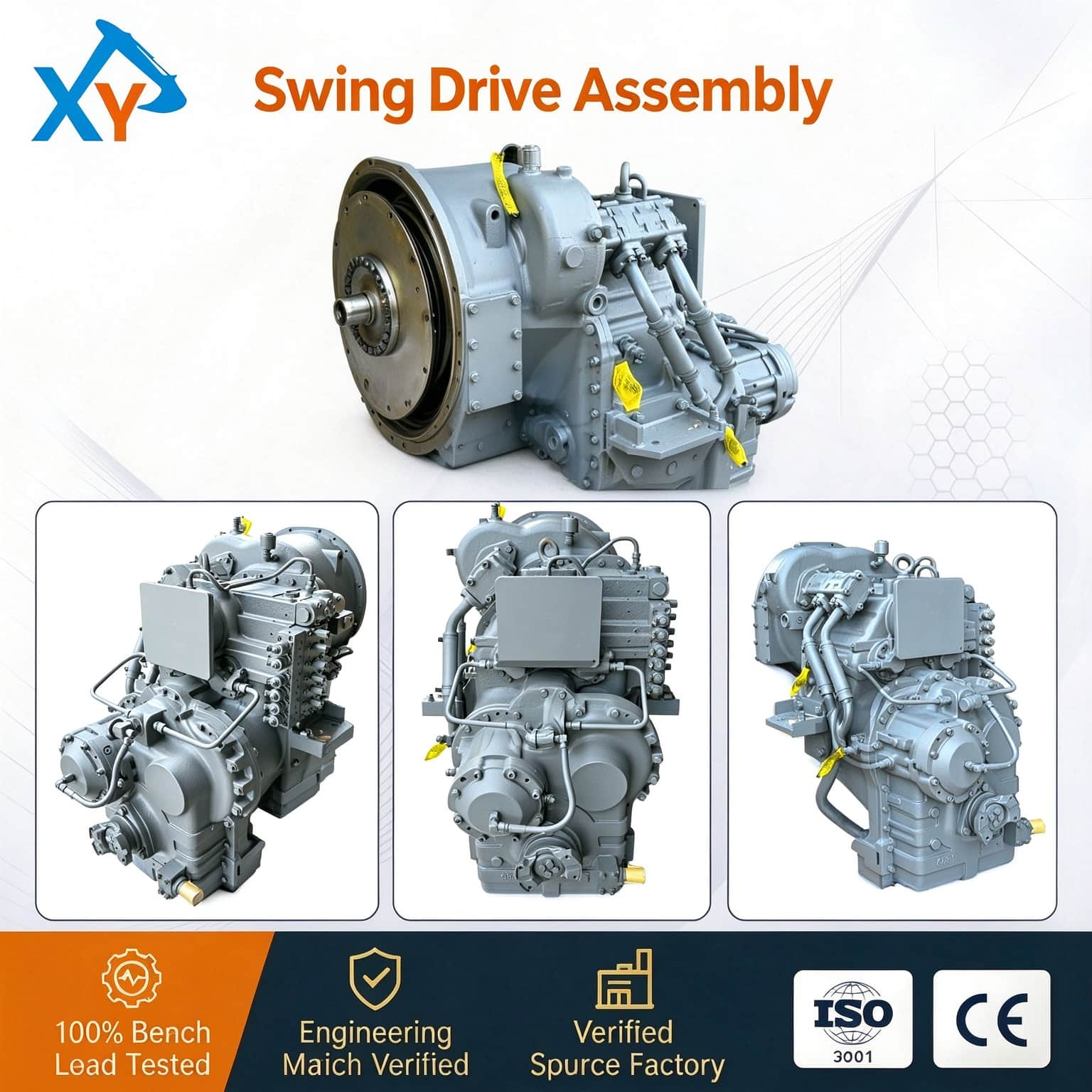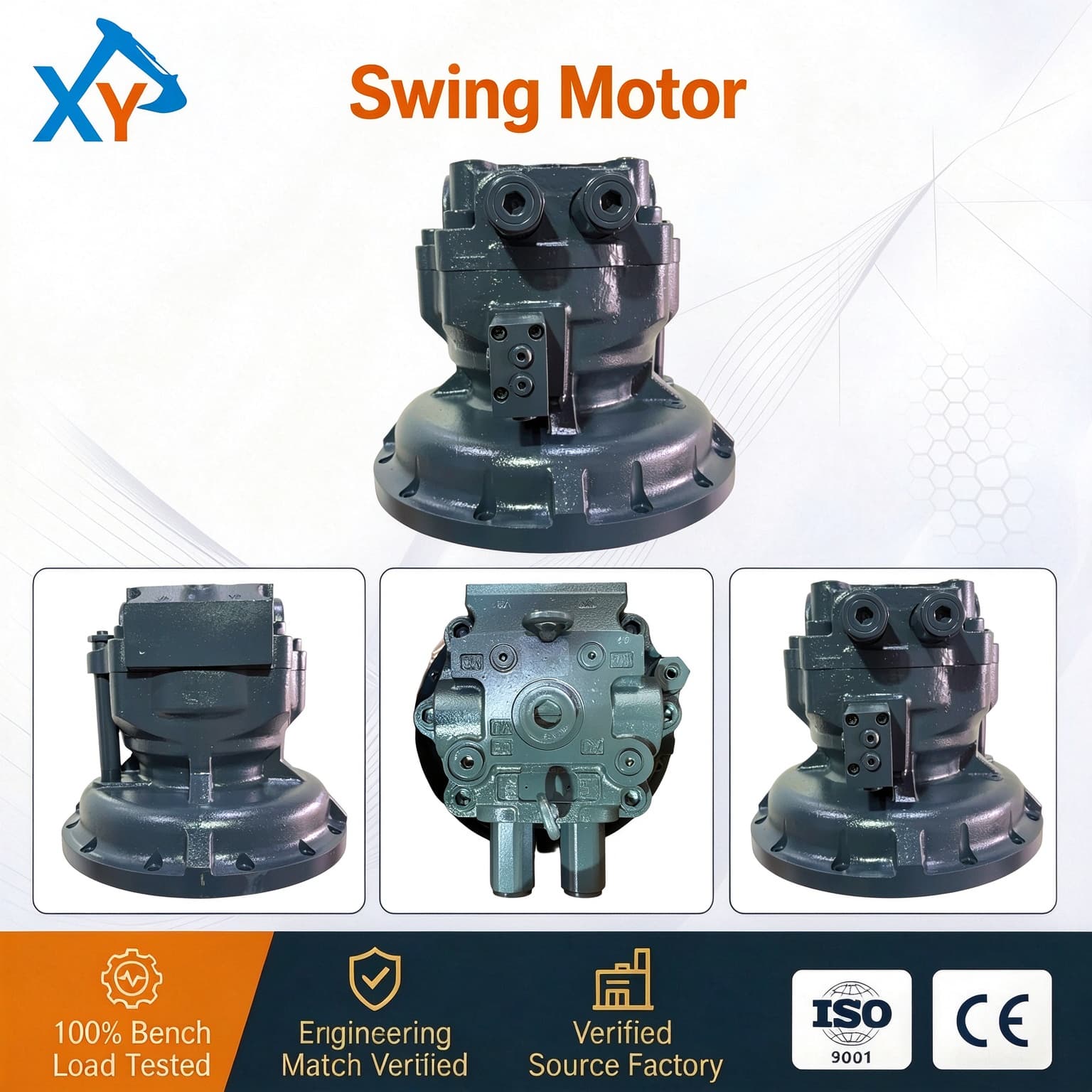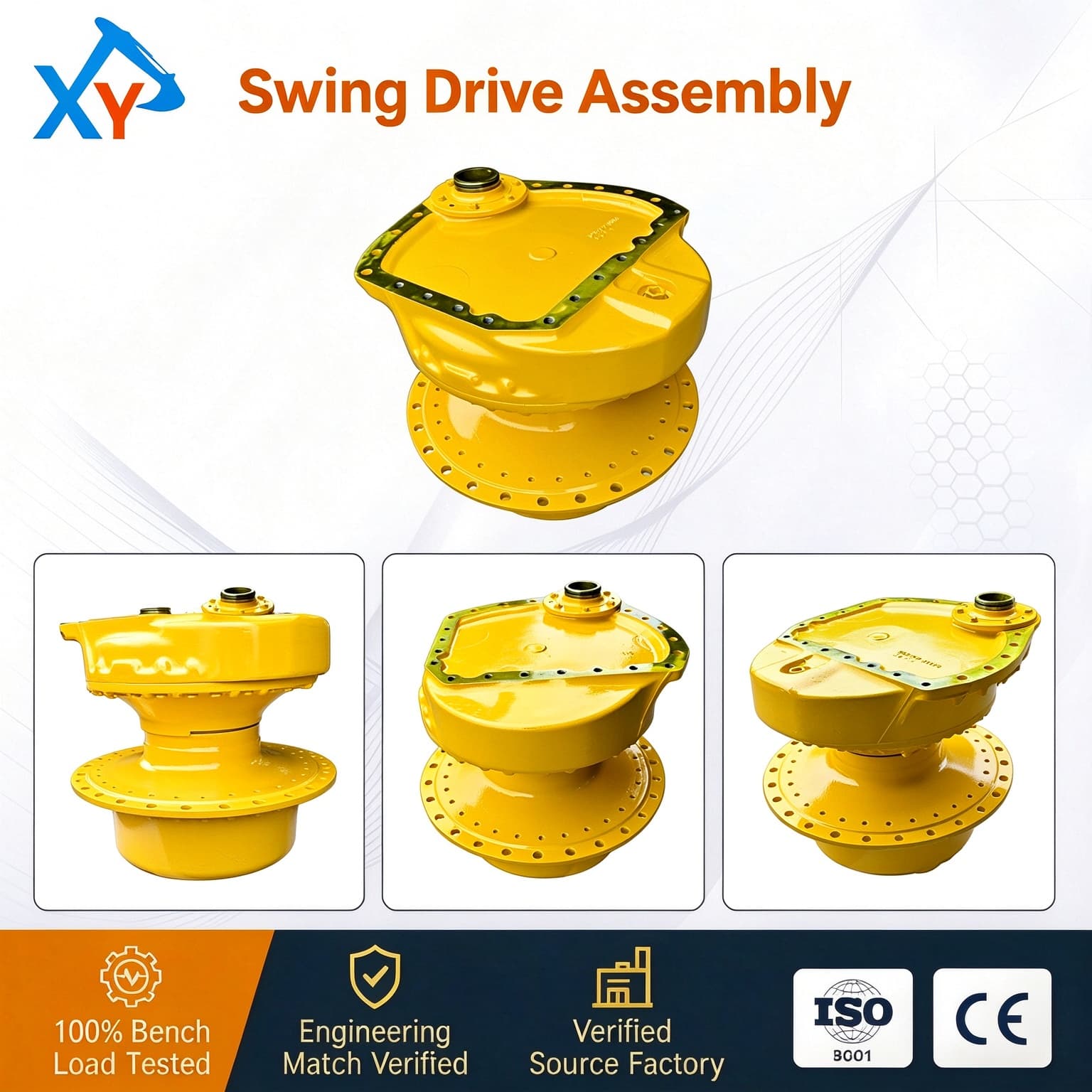
XINYA supplies excavator parts including hydraulic pumps, travel motors, swing devices, control valves, engine parts and undercarriage components. Send us your machine model, OEM part number or product photo for fast matching and quotation.
XINYA supplies excavator parts including hydraulic pumps, travel motors, swing devices, control valves, engine parts and undercarriage components. Send us your machine model, OEM part number or product photo for fast matching and quotation.

Construction machinery parts fall into functional groups that explain how a machine works. Across excavators, bulldozers, wheel loaders, cranes, and similar equipment, the main groups are the power source, drivetrain, hydraulic system, controls and electrical system, working equipment, chassis or undercarriage, service systems, and operator and safety systems. The exact layout changes by machine model, but these groups explain how energy becomes movement, digging force, lifting force, travel, and control.
When a part needs replacement, the group is only the starting point. The machine make, model, serial number, OEM number, component position, and clear photos are needed to confirm fit. This matters because two parts can look similar while differing in mounting, ports, dimensions, software, or operating requirements.

| Component group | Main parts | Main function | Example machines |
| Power source | Diesel engine, fuel system, intake and exhaust parts | Creates mechanical power | Excavators, loaders, dozers, cranes |
| Drivetrain | Couplings, gearboxes, axles, final drives, travel motors | Sends power to movement systems | Excavators, wheel loaders, dozers |
| Hydraulic system | Pump, tank, valves, cylinders, motors, hoses | Transmits controlled force and motion | Excavators, loaders, cranes |
| Controls and electrical | Joysticks, pilot controls, sensors, harnesses, controller | Converts operator input into machine action | Most modern machines |
| Working equipment | Boom, arm, bucket, blade, forks, attachments | Performs the site task | Excavators, dozers, loaders |
| Chassis or undercarriage | Frame, tracks, rollers, sprockets, axles, tires | Supports the machine and transfers load | Crawler and wheeled equipment |
| Service systems | Cooling, lubrication, filtration, fuel and air systems | Keeps components within working conditions | All engine powered equipment |
| Operator and safety systems | Cab, seat, guards, lights, alarms, access steps | Supports safe and controlled operation | All machine types |
These groups overlap: a travel motor is both a hydraulic component and part of the drivetrain. Use the list to locate an assembly, then check the machine parts book for its exact name and number.
The power source usually starts with a diesel engine, although some equipment uses electric drives, hybrid systems, or another energy arrangement. Engine parts include the block, cylinder head, pistons, crankshaft, fuel injection components, turbocharger, starter, alternator, and exhaust equipment. Air and fuel must enter in the correct quantity, combustion must produce usable torque, and exhaust gases must leave through the designed path.
For buyers, engine identification should go beyond the machine name. Record the engine model, machine serial number, component number, and any plate or casting mark. XINYA groups replacement options under excavator engine parts, but model and application details still need to be checked before an order is confirmed.
The drivetrain carries power from the engine or hydraulic source to the motion that moves the machine. Depending on the equipment, it can include a torque converter, coupling, gearbox, axle, differential, travel motor, final drive, or swing reduction unit.
Crawler excavators use a travel system to drive the tracks and a separate swing system to rotate the upper structure. For an excavator travel device or excavator swing device, identify the model and assembly number; specify the installation side where relevant. Many wheel loaders use a transmission and axles for travel, with a separate hydraulic circuit for bucket movement. Bulldozers add a heavy final-drive and track arrangement designed for pushing loads across the ground.
Hydraulics use pressurized fluid to transmit force through pumps, valves, cylinders, motors, hoses, pipes, and a reservoir. The pump creates flow. Valves meter and direct that flow. Cylinders create linear movement, while hydraulic motors create rotation.
On an excavator, hydraulics move the boom, arm, and bucket, power travel and swing, and may run auxiliary attachments. A replacement request may involve a complete pump or valve assembly, or smaller excavator hydraulic components such as hoses and cylinder parts. The correct choice depends on the circuit and component position, not only on the machine brand.
The excavator hydraulic pump and excavator control valve work together, but they do different jobs. A weak function does not automatically prove that the pump has failed. Contamination, a valve issue, internal leakage, air, a damaged hose, or a mechanical load can create similar symptoms. Use the applicable service procedure and pressure limits before adjustment or replacement. Qualified personnel should isolate the machine and relieve stored pressure using the manufacturer’s procedure before opening a hydraulic circuit.
The control system connects the operator with the machine. It may include joysticks, foot pedals, pilot valves, switches, sensors, solenoids, electronic controllers, displays, batteries, alternators, and wiring harnesses. On newer machines, software and communication networks also influence how hydraulic and drivetrain functions respond.
Working equipment is the part that meets the material or load. An excavator normally uses a boom, arm, bucket, and linkage. A bulldozer uses a blade and its lift and tilt arrangement. A wheel loader uses lift arms, a bucket, and quick-coupler parts. A crane uses a boom, wire rope, hook, winch, and related load-handling equipment.
Attachments change the machine’s job. Breakers, grapples, augers, shears, forks, and buckets can require auxiliary hydraulic lines, different couplers, or dedicated control settings. The attachment, pins, bushes, hoses, and mounting interface should be checked as one working group. Wear at a pin or bush can change alignment and load paths, which may damage nearby parts even when the attachment itself still operates.
The chassis carries the machine and transfers working loads into the ground. Crawler equipment uses track chains, track shoes, rollers, idlers, sprockets, and track frames. Wheeled equipment uses axles, wheels, tires, steering components, and frame sections.
Undercarriage wear affects travel resistance, alignment, stability, and maintenance cost. When ordering excavator chassis parts, provide the machine model, track size or component marking, serial range, and a photo of the part. A roller, idler, or sprocket that fits one undercarriage may not suit another with a similar machine name.
Cooling and lubrication systems protect the power unit and moving assemblies. Radiators, oil coolers, fans, pumps, thermostats, filters, breathers, and lubricants help manage heat and contamination. Fuel filters and air filters protect combustion and injection components. Hydraulic filters protect precision surfaces in pumps, valves, and motors.
The cab, seat, controls, windows, mirrors, lights, alarms, guards, handrails, and access steps give the operator a workable and safer environment. Depending on the machine and application, protective structures, interlocks, emergency stops, and visibility aids may also form part of its safety design.
The same groups appear on different machines, but their priorities change.
This comparison helps avoid a common mistake: treating every construction machine as if it used the same parts list. The functional groups are similar, but the assemblies, controls, and service requirements are different.
Before requesting a quotation, collect the following information:

Confirm compatibility against the relevant parts book, drawing, service information, or engineer-approved specification. A casting number or photo alone may not identify a complete assembly.
Send the machine make and model, serial number, OEM number, component photos, required quantity, and the assembly or part you need. XINYA can review the information and provide a preliminary match and quotation for suitable construction machinery spare parts. For a faster response, explain whether the request concerns a hydraulic system, engine, travel unit, swing unit, control valve, or undercarriage.
Most construction machinery can be grouped into a power source, drivetrain, hydraulic system, control and electrical system, working equipment, chassis or undercarriage, service systems, and operator and safety systems. The exact parts depend on the machine type and model.
The main excavator components are the engine and power source, hydraulic pump and control valve, cylinders and motors, boom arm and bucket, swing and travel devices, cab, and undercarriage. Parts identification still requires model and serial details.
Some parts may have an equivalent application, but interchangeability cannot be assumed from appearance or a similar model name. Check dimensions, mounting, ports, controls, materials, and the applicable parts information.
Send the machine make, model, serial number, OEM number, component photos, part location, quantity, and whether you need a complete assembly or an individual replacement part. Include symptoms for troubleshooting-related requests.